
 From Crawford to Fisk: Has Chicago Closed the Gaps in Demolition Oversight?
By: Madison Harter
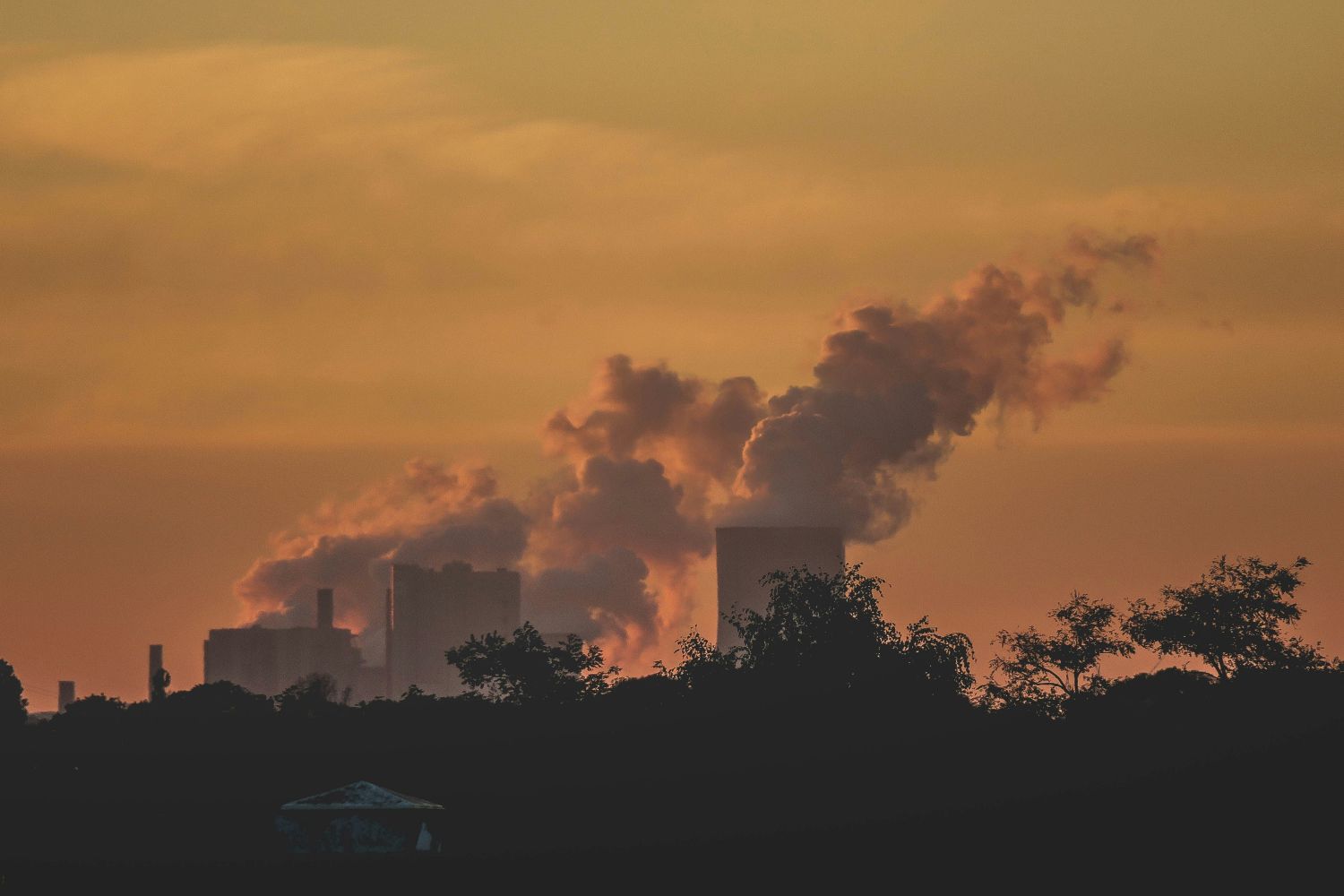
On the morning of April 11, 2020, the nearly 400-foot smokestack of the Crawford coal plant crumpled to the ground in Chicago’s Little Village neighborhood.[1] The implosion caused dust to blanket homes, cars, and streets in a community that was already living through the beginning of the COVID-19 pandemic.[2] Today, Pilsen, another neighborhood in Chicago, is fighting the city over the partial demolition of another coal plant, Fisk.[3] This clash questions whether the City of Chicago has properly addressed mistakes made with the Crawford Plant and whether Fisk will suffer the same regulatory deficits. Chicago’s reforms after Crawford address some of the failures behind the 2020 implosion, but they do not guarantee the transparency, real notice, and cumulative impact reviews that communities need. The proposed Fisk demolition will show whether the City of Chicago has done enough to promote proper demolition protections.
The Failures of Crawford
Little Village is a predominately Hispanic neighborhood and a gateway for Mexican immigrants into the Midwest.[4]Little Village is one of the most polluted neighborhoods in Chicago, largely due to the area’s heavy industrial background.[5] In the 1920s, the Crawford coal plant was established on the bank of the neighborhood’s canal.[6] Like many older coal plants, Crawford was exempt from the newer Clean Air Act requirements due to its age.[7] The plant was still using 1950s equipment when it closed in 2012 after years of community pressure.[8] Researchers at the Harvard School of Public Health found the Crawford and Fisk plants contributed to 41 premature deaths, 550 emergency room visits, and 2,800 asthma attacks every year.[9]
However, environmental harms continued following the closure of the plant. Hilco Redevelopment Partners (“Hilco”) subsequently purchased the vacant site with plans to develop a distribution warehouse, now leased to Target.[10] Hilco began demolition work in 2019.[11] Health inspectors recommended precautions such as wetting the site and tracking wind conditions to protect the community from unnecessary pollution, but these precautions were not enforced.[12] The Illinois Environmental Protection Agency (“EPA”) was worried a substantial dust plume was still left at the site,[13] and the Mayor’s office later alleged Hilco’s precautions were inadequate.[14] The city’s inspector general found Hilco’s development plans did not involve an implosion, and city officials should have reviewed the permit again once it did.[15]Residents say they had almost no warning of any planned implosions as flyers appeared at affected homes only hours before the blast.[16]
The legal consequences were modest. The city fined Hilco $68,000 for the dust.[17] The Illinois Attorney General Kwame Raoul sued Hilco and its contractors for the air pollution, settling in 2020 for around $370,000.[18] Residents filed a federal class action claim alleging hazardous conditions, property damages, and breathing issues resulting in a $12.25 million settlement.[19] Hilco still denied wrongdoing and proceeded with building the warehouse anyway.[20]
Regulatory Gap
The Crawford demolition exposed a gap in how environmental law regulates demolition. Current regulation of coal plant air pollution prioritizes operational plants and primarily requires permits, emission limits, and EPA air monitoring.[21]Dust from a demolition is generally treated as a fugitive emission, meaning pollution that does not come from a stack, governed mainly by Illinois’s statutory and regulatory ban on air pollution.[22] This rule allows a penalty after the harm occurs.[23] It does not require a health review beforehand or a guarantee that residents will be informed.[24] Illinois power plant demolitions have been subject only to asbestos rules and inconsistent local requirements.[25]
No one has taken responsibility for Crawford. Even within city government, officials passed the problem around: the Buildings Commissioner insisted dust was not in her department’s expertise and belonged to the Public Health Department’s instead.[26] The courts have offered no better answer. Because every Crawford case settled, no court ever decided who was legally responsible for the harm. Illinois imposes strict liability for abnormally dangerous activities, but its courts have not resolved whether a demolition as Crawford qualifies.[27] One court left room for strict liability when a demolition is not an emergency in a dense area or uses a method poorly suited to its surroundings.[28] Crawford, a planned implosion in a crowded neighborhood, fits that model. Yet with each agency pointing to another and every lawsuit ending in settlement, the question of who answers for the dust remains unanswered, and the residents are still waiting.
Following Crawford, Chicago recognized the need to change. Mayor Lightfoot imposed a six-month moratorium on implosions and used it to rewrite the rules governing demolition methods.[29] The City Council added a municipal code chapter on multiagency regulation of implosions,[30] and the Department of Public Health adopted rules requiring dust mitigation plans, air monitoring, soil sampling, sign-off from several departments, and a community meeting 30 to 60 days after an application is filed.[31] The City Council also raised maximum fines up to $50,000 for large industrial facilities and demolition contractors that violate the city’s air pollution standards.[32] It remains to be seen whether these reforms are sufficient to address the harms caused in the Crawford demolition.
Fisk: A Test of Reforms
The Fisk Plant in Pilsen is a major test of whether Chicago’s post-Crawford reforms are sufficient. The owners of the Fisk plant are currently seeking to demolish portions of the plant, including tanks and silos.[33] The plant’s proximity to the river and its past use as a coal plant has caused the city to classify any demolition efforts as “environmentally complex.”[34]
Pilsen residents and the Pilsen Environmental Rights and Reform Organization (P.E.R.R.O.), have urged the city to reject permits to demolish the plant.[35] Alderman Byron Sigcho-Lopez has vowed to continue to try to block the permits until more environmental details are released and the owner reveals its long-term plan for the site.[36] The current plan does not include testing or cleanup for contaminants other than lead and asbestos.[37] Residents want transparent environmental testing, dust and toxin protections, and a nonpolluting source to eventually replace the plant.[38]Community pressure has halted the Fisk demolition, and residents have received few updates.[39]
The residents of Pilsen and similarly interested groups are calling for the following reforms:
- Pre-approval transparency. Dust control plans, soil testing, and air monitoring data should be public before permits are issued, not after a problem occurs. This is what Pilsen residents are asking for now.[40]
- Real notice. Residents need access to these reports and a clear, advanced, and multilingual notice of the work. There needs to be a streamlined communication so the city can hear the residents’ concerns and actually address them.
- Cumulative impact reviews. Overburdened communities should face a higher approval standard before dust-generating work is permitted, and that review should include what will replace the plant. The new state law is a start, but still does not require the reviews prior to a demolition.[41] In Little Village, the community proposed new uses for the Crawford space, like a greenhouse, street-food vendor hub, or a solar facility, but a Target warehouse was approved instead.[42] Communities should have a say in reuse before the demolition is approved, not after.
- Legislative Liability. The legislature or City Council could also clarify liability by declaring that non-emergency implosions in dense residential areas or “environmentally complex” areas be subject to strict liability. Ultimately, the city has the opportunity to hold companies accountable proactively rather than retroactively.
The Crawford dust cloud has become a symbol of how environmental burdens fall on the most vulnerable communities. Fisk gives Chicago a chance to show what it learned. Whether it did will depend less on the new procedures the city has adopted and more on whether those procedures are binding, transparent, and enforced before the harm, rather than after. Pilsen and Little Village residents are still waiting for Chicago to prove that their health counts before the dust settles, not after.
[1] Heather Cherone, A Year After Smokestack Implosion Coated Little Village in Dust, Environmental Justice Fight Grinds On, WTTW (April 12, 2021, at 8:32PM CDT), https://news.wttw.com/2021/04/11/year-after-smokestack-implosion-coated-little-village-dust-environmental-justice-fight[https://perma.cc/ADD7-2QPA].
[2] Illinois agency refers ‘enforcement action’ against company after smokestack demolition, Fox32 (April 23, 2020, at 8:19PM CDT), https://www.fox32chicago.com/news/illinois-agency-refers-enforcement-action-against-company-after-smokestack-demolition[https://perma.cc/6N4K-Y4GN].
[3] Liana Ordoñez, Pilsen Residents Halted the Fisk Demolition. Eight Months Later, Residents are Demanding Answers, 15 West (October 12, 2026), https://www.15west.org/featured/pilsen-residents-halted-the-fisk-demolition-eight-months-later-residents-are-demanding-answers/[https://perma.cc/Y4UQ-YRL2].
[4] Tanya Joshi, Environmental Racism in Chicago: A Case Study of the Crawford Coal Plant Implosion and Replacement Plan, Ch. 7, 132 (unpublished manuscript) (Univ. of Chi. Harris Sch. of Pub. Pol’y), https://harris.uchicago.edu/files/inline-files/Chapter%207,%20Tanya%20Joshi.pdf.
[5] Id. at 133.
[6] Id.
[7] Philip Bump, Chicago’s Notorious Fisk and Crawford Coal Plants Go Offline, Grist (August 31, 2012), https://grist.org/climate-energy/chicagos-notorious-fisk-and-crawford-coal-plants-go-offline/ [https://perma.cc/NM8F-P95P].
[8] Henry Henderson, Coal Clunkers Closing: Public Pressure Finally Shutters Chicago’s Notorious Fisk and Crawford Coal Plants, NRDC(February 29, 2012), https://www.nrdc.org/bio/henry-henderson/coal-clunkers-closing-public-pressure-finally-shutters-chicagos-notorious-fisk[https://perma.cc/2GET-YE7L].
[9] The Dirtiest Plant in Chicago, NBC Chicago, (April 13, 2010, at 12:53PM CDT), https://www.nbcchicago.com/news/local/chicago-politics/the- dirtiest-plant-in-chicago/1870978/ [https://perma.cc/3ZGH-TAHL].
[10] Joshi, supra note 4 at 134.
[11] Id.
[12] Brett Chase, Seven months before smokestack’s botched implosion smothered Little Village in dust, Chicago city inspector issued dire warning, Chi. Sun Times (August 5, 2022, at 5:10AM CDT), https://chicago.suntimes.com/2022/8/5/23292152/hilco-crawford-coal-plant-implosion-warning-john-kryl-dust-cloud-little-village [https://perma.cc/JA5V-XGMN].
[13] Brett Chase and Mauricio Peña, Developer in Little Village Demolition Gone Wrong Cited by State EPA With Violating Pollution Laws, Illinois Answers Project (April 22, 2020), https://illinoisanswers.org/2020/04/22/developer-in-little-village-demolition-gone-wrong-cited-by-state-epa-with-violating-pollution-laws/ [https://perma.cc/T3T5-GRCL].
[14] Press Release, City of Chi., Off. of the Mayor, Address Environmental Concerns in Little Village Following Demolition (April 12, 2020), https://www.chicago.gov/content/dam/city/depts/mayor/Press%20Room/Press%20Releases/2020/April/LittleVillageDemolition.pdf
[15] Chi. Off. of Inspector Gen., Report of Investigation: OIG Case No. 20-0486 (September 27, 2021)
[16] Joshi, supra note 4 at 140.
[17] Cherone, supra note 1.
[18] See Compl., People ex rel. Raoul v. Hilco Redevelopment, LLC, No. 2020-CH-04076 (Ill. Cir. Ct. Cook Cnty. May 5, 2020) settled byConsent Order (November 19, 2020).
[19] Order Granting Final Approval of Class Action Settlement, Solis v. Hilco Redevelopment, LLC, No.1:20-cv-02348 (N.D. Ill. April 22, 2024).
[20] Joshi, supra note 4 at 135.
[21] See, e.g., 42 U.S.C. §7661-7661f (operating permits for major stationary sources).
[22] 415 Ill. Comp. Stat. 5/9(a) (2024); Ill. Admin. Code tit. 35, §212.301 (2024).
[23] Id.
[24] See Illinois Power Plant Communities At Risk, Prairie Rivers Network (February 14, 2022), https://prairierivers.org/uncategorized/2022/02/illinois-power-plant-communities-at-risk/ [https://perma.cc/3NYG-Z8EB] (describing proposed legislation that would require public notice, public meetings, and an Illinois EPA-approved air quality plan before power plant implosions).
[25] Id.
[26] Brett Chase, Botched Little Village Smokestack Implosion Wasn’t My Fault, Chicago City Official Says of Dust Storm Fiasco, Chi. Sun Times(August 1, 2024, at 3:24PM CDT), https://chicago.suntimes.com/the-watchdogs/2024/08/01/little-village-implosion-hilco-marlene-hopkins-crawford-plant-chicago-health-department [https://perma.cc/7D4E-U8CS].
[27] See Clark v. City of Chicago, 410 N.E.2d 1025, 1028 (Ill. App. Ct. 1980).
[28] Id. at 1027-1028.
[29] Cherone, supra note 1.
[30] Chi., Ill., Municipal Code ch. 2-30 (2026).
[31] Chi. Dep’t of Pub. Health, Rules and Regulations regarding Demolition by Implosion (April 7, 2021), https://www.chicago.gov/city/en/depts/dol/rules-and-regulations-portal/demolition-by-implosion—-chicago-department-of-public-health.html.
[32] Mauricio Peña, Environmental Polluters That Violate City Rules Will Face Bigger Fines After Ordinance Approved, Block Club Chi. (January 27, 2021), https://blockclubchicago.org/2021/01/27/environmental-polluters-that-violate-city-rules-will-face-bigger-fines-after-new-ordinance-approved/ [https://perma.cc/SS95-N8YY].
[33] Francia Garcia Hernandez, Pilsen Neighbors Urge City To Reject Fisk Power Station Demolition Permits, Block Club Chi. (September 29, 2025), https://blockclubchicago.org/2025/09/29/pilsen-neighbors-urge-city-to-reject-fisk-power-station-demolition-permits/[https://perma.cc/Z37M-9YMR].
[34] Id.
[35] Id.
[36] Id.
[37] See New bedfellows—and also old tensions—in debate over Chicago coal plants’ fate, Canary Media (October 15, 2012), https://www.canarymedia.com/articles/enn/new-bedfellows-and-also-old-tensions-in-debate-over-chicago-coal-plants-fate[https://perma.cc/5PMW-HQK5].
[38] Id.
[39] Ordoñez, supra note 3.
[40] Ordoñez, supra note 3.
[41] Environmental Justice Permitting Act, supra note 22.
[42] Joshi, supra note 4 at 142.